
Since time immemorial, yilíkʷlxkn have been integral to the Syilx people. They symbolize a deep, interdependent relationship with the tmxʷulaxʷ – land. The ONA has undertaken numerous initiatives to monitor and protect the bighorn sheep herds in the territory from disease outbreaks and is working to improve habitat connectivity. We are currently monitoring and managing diseases found within the herds, including Psoroptic Mange.
What is Psoroptic Mange?
Psoroptic mange, caused by mite infestations, severely impacts yilíkʷlxkn health, causing sores, hair loss, inflammation, and scabs. In severe cases, thick ear crusts impair hearing, increasing predator vulnerability. These mites, non-contagious to humans, can survive without a host for over a month in cold, dry conditions. As an indicator species, their health reflects the overall condition of their habitat. The threat of diseases like Psoroptic Mange underscores the urgent need for proactive management, as addressing these issues not only safeguards the yilíkʷlxkn but also supports the health of other wildlife and livestock in the area.
Initiative Overview:
Over the past years, yilíkʷlxkn in the southern Okanagan have been experiencing a steady population decline. This decline is theorized to be due in part to infection by pneumonia (Mycoplasma ovipneumoniae (M.ovi)), psoroptes (Psoroptes cuniculi) mites and Blue Tongue as contributing factors to overall poor yilíkʷlxkn health.
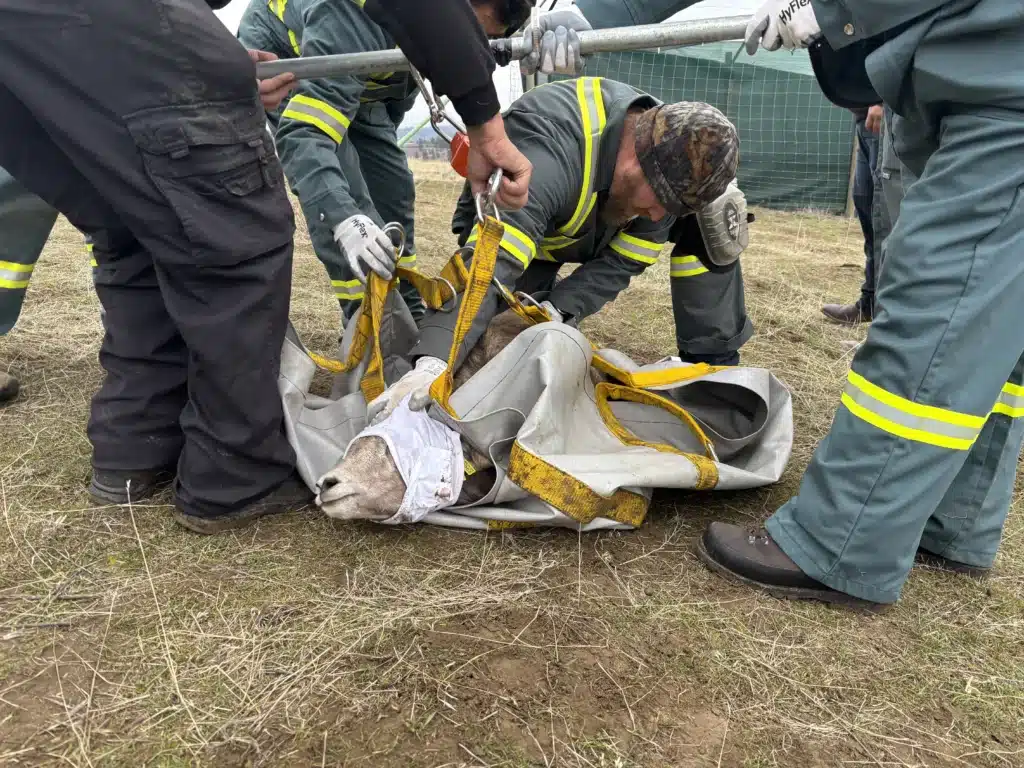
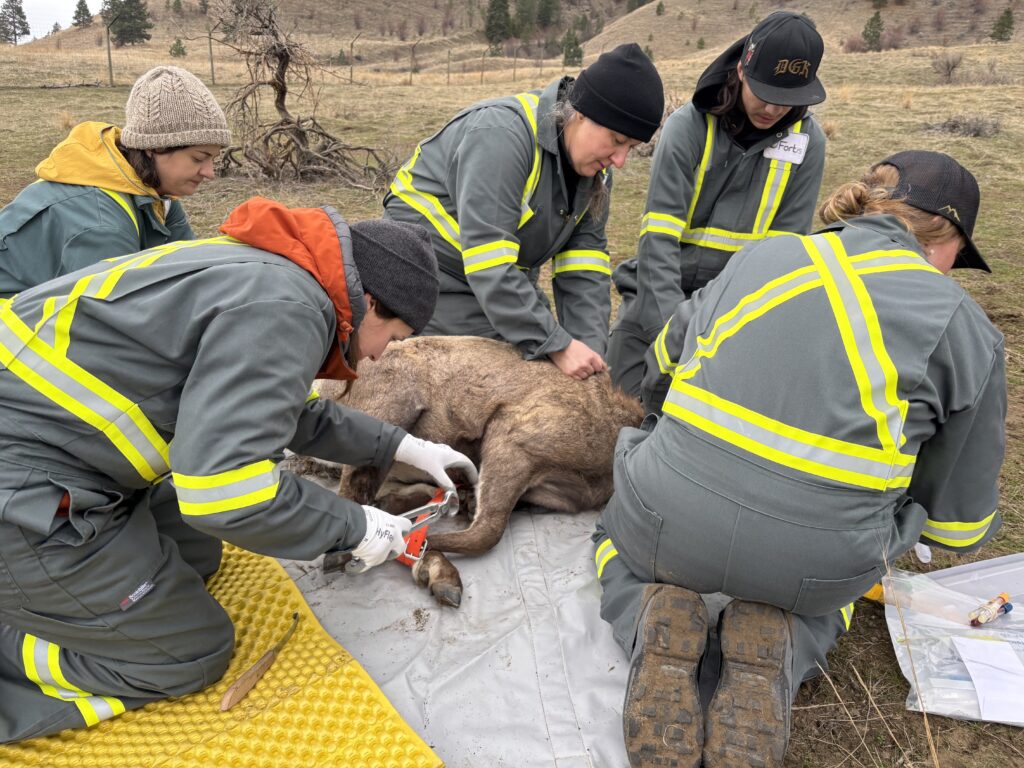
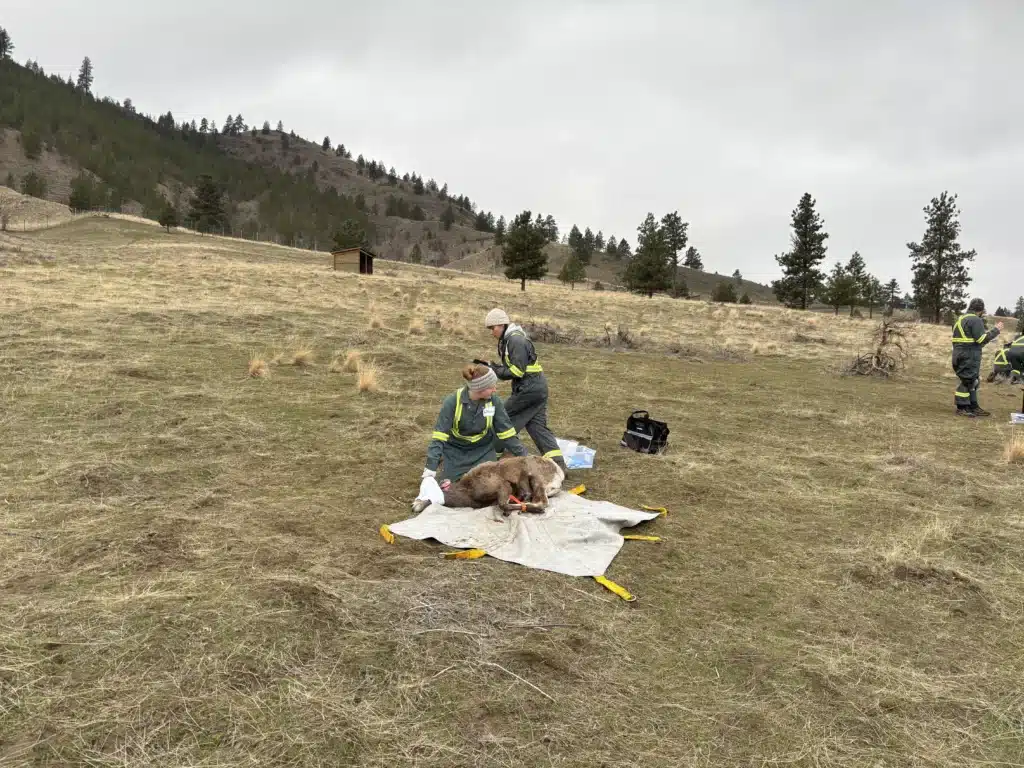
To address this concern, the Okanagan Nation Alliance, in partnership with several organizations, has launched a drug trial project aimed at developing potential treatment strategies for wild sheep populations.
The project brings naturally infested bighorn sheep from the affected herds into four research enclosures and treat them with the long-acting ML, moxidectin (Cydectin 2% LA, Zoetis Ltd), a previously tested oral fluralaner treatment, or a combination treatment combining the ML and fluralaner. The information provided by this trial will form the foundation of future disease treatment initiatives. This research aims to provide wildlife managers with effective treatment options and information on the period of protection that animals could have before the first animals become susceptible to re-infestation from untreated herd mates. This information will form a crucial part of a future treatment plan for wild sheep populations.
Objectives
- Trial and Treatment Efficacy
- Confirm treatment options, dosages, delivery, and efficacy in wild and captive yilíkʷlxkn.
- In a 15-18 month trial, ~36 Psoroptes-infested yilíkʷlxkn will be treated in captive enclosures to assess drug effects.
- Assess yilíkʷlxkn population response to large-scale treatment.
- Disease Monitoring and Spread Prevention
- Monitor Psoroptes spread to uninfected populations in BC and Washington.
- Use ELISA testing to detect infections early and validate their effectiveness for yilíkʷlxkn.
- Track yilíkʷlxkn population metrics (mortality, growth) and prevalence in infected populations.
Expected Impact
This work aims to establish effective, scalable treatment for Psoroptes in wild herds, advancing adaptive wildlife management strategies for sustaining yilíkʷlxkn populations across BC and internationally.
Additional Resources
View our downloadable info-sheets about the Psoroptes trial:
Project Partners:
The Wild Sheep Society, British Columbia; The Ministry of Water, Land and Resource Stewardship; Moredum; snipink’tn Indian Band; Lower Similkameen Indian Band; Upper Similkameen Indian Band; Osoyoos Indian Band, Okanagan Indian Band and West Bank First Nation.
Questions or concerns?
For More Info Contact:
Mackenzie Clarke, MSc, RPBio, tmixʷ (Wildlife) Program Lead
Email: mclarke@syilx.org
Media
IndigiNews:
Okanagan researchers working to treat bighorn sheep disease
CBC News: